
Hi,it's us we're the problem.
The city keeps talking about homelessness without listening to homeless people.
FROM DOWN HERE.↘
For a long time I had a strict no-news policy.
Not because I didn’t care.
The opposite, actually.
My brain takes bad news and refuses to let go of it. One headline turns into ten hours of spiraling.
One article becomes an entire night of imagining collapse in microscopic detail until the anxiety starts feeling physical.
So I stopped reading the news almost entirely.
But lately I lifted the ban.
I figured if I’m going to survive inside these systems, I should probably know what the systems are doing.
So I started reading again.
Mostly articles about homelessness, poverty, public policy, mental health, addiction, social services, and government decisions.
I tried to narrow the focus.
It did not help.
The more I read, the more it feels like society is learning to discuss human beings as civic inconvenience instead of people.
Even articles supposedly advocating for compassion still leave me feeling sick afterward.
And honestly, I do not think it is entirely the journalists.
Most reporters are just trying to package complicated realities into readable stories under impossible deadlines.
What unsettles me more is the language coming from officials, policymakers, spokespeople, and institutional representatives.
The tone.
The framing.
The emotional distance.
Even when they are trying to sound compassionate, there is often this underlying hostility quietly leaking through the wording.
Like homelessness itself is something offensive to witness.
Like poverty is becoming publicly categorized as a visual management problem.
Sometimes it feels like the public is being trained to tolerate poor people less and fear them more.
I started noticing how similar these articles feel no matter where they are happening.
Ottawa.
San Francisco.
Saskatchewan.
Buenos Aires.
Different governments. Different policies. Different political language.
Same emotional framing.
The homeless become “concerns.”
Encampments become “problems.”
Addiction becomes “disorder.”
Human suffering becomes reduced to public optics management.
The portrayal stays disturbingly consistent even when the geography changes.
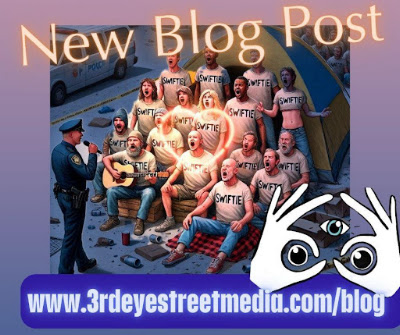
One article that stuck with me was about the clearing of a homeless encampment in New Orleans before a Taylor Swift concert.
Roughly seventy-five people displaced.
Removed because of “safety concerns” surrounding the event.
Safety for who?
Nobody really says.
The language just floats there pretending the answer is obvious.
But what actually happened was that a group of already displaced people were forced to move the little they still owned because a major entertainment event was arriving.
That reality should disturb people far more than it seems to.
And the numbers make it even harder to ignore.
The concert reportedly generated around two hundred million dollars in ticket sales from that New Orleans stop alone.
Meanwhile the estimated cost to house all seventy-five people from that encampment would have been a microscopic fraction of that revenue.
One percent.
Practically invisible at that scale.
I do not blame Taylor Swift personally for systemic collapse.
But the contrast itself feels grotesque.
Entire human beings are treated as movable obstacles beside industries generating more money in one night than most people will ever see in their lives.
What keeps bothering me most though is not even the event itself.
It is the wording used around these situations.
The subtle programming hidden inside ordinary language.
Statements like: “Only the most dangerous blocks, where homeless regularly walk across busy streets, are being shut down.”
Not “people experiencing homelessness.”
Not even “the homeless.”
Just: homeless.
Like an environmental condition.
Like weather.
Like debris.
Tiny wording choices matter because repetition shapes perception.
The public absorbs these patterns subconsciously over time.
Eventually people stop hearing human beings entirely and start hearing categories.
Language is infrastructure too. And right now a lot of that infrastructure is teaching people not to see us fully human anymore.
Even supportive articles often still frame homelessness through fear, pity, danger, inconvenience, or public disorder.
Rarely through humanity.
Rarely through emotional reality.
Rarely through the actual psychological experience of trying to survive instability every single day while society watches you like a public warning sign.
And that framing shapes policy.
It shapes healthcare.
It shapes policing.
It shapes housing access.
It shapes housing access.
It shapes public empathy.
Or destroys it.
The more society misunderstands homelessness, the easier it becomes to justify systems that punish people for surviving it poorly.
You cannot build compassionate policy on top of dehumanizing narratives.
I wish the media would speak about poverty differently.
More honestly.
More carefully.
More humanely.
Not just because accuracy matters.
But because people absorb these stories every single day until they become the emotional architecture of society itself.
And right now that architecture feels cold.
Defensive.
Afraid.
Increasingly hostile toward the very people it has already abandoned.
Reality: when homelessness is discussed primarily as disruption instead of suffering, society stops trying to solve the crisis and starts trying to hide it.
The city keeps talking about homelessness without listening to homeless people.